
The Silent Guardians of Food Systems: Unseen Heroes

In an increasingly interconnected world, safeguarding the integrity of our food systems has never been more critical. The term “food systems” refers to all the elements and activities related to producing and consuming food, and their effects, including economic, health, and environmental outcomes. From the producer’s field to the consumer’s plate, the entire food production and distribution chain relies heavily on precise measurement and control systems. 

For example, a large food distribution company that specializes in the delivery of fresh produce relies on a fleet of refrigerated trucks to transport goods from the warehouse to various retailers. Maintaining the cold chain is critical to ensure that perishable products, such as fresh produce, dairy, and frozen goods, remain safe for consumption. Proper temperature and humidity control are essential to prevent bacterial growth and maintain product quality. A slight miscalibration or deviation from the required conditions can lead to far-reaching consequences.

A slight miscalibration or deviation from the required conditions can lead to far-reaching consequences.

Let us explore the often-overlooked yet immensely important role that proper calibration plays in securing our food systems. We will discuss the significance of calibration and how it can make or break businesses in the food industry.

The Unseen Heroes: Calibration’s Role in Food Systems

  1. Ensuring Consumer Safety: In the world of food, safety is paramount. Precise measurement and control systems play a pivotal role in preventing contamination and ensuring the products we consume are safe. Whether it’s the correct measurement of ingredients or maintaining optimal storage conditions, calibration is the unsung hero in keeping consumers safe.
  2. Navigating Regulatory Compliance: The food industry is governed by strict regulatory standards, and adhering to these standards is non-negotiable. Accurate calibration helps businesses meet these regulations, significantly reducing the risk of expensive fines and legal complications.
  3. Consistency is Key: Consistency is a competitive edge in the food industry. Accurate calibration ensures that products maintain the same high standards every time, fostering trust and loyalty among customers.
  4. The Path to Efficiency: Efficiency is paramount in an industry where perishable goods need to be processed and distributed promptly. Well-calibrated measurement systems can significantly boost operational efficiency, reducing waste and enhancing overall productivity.

Unsung Heroes

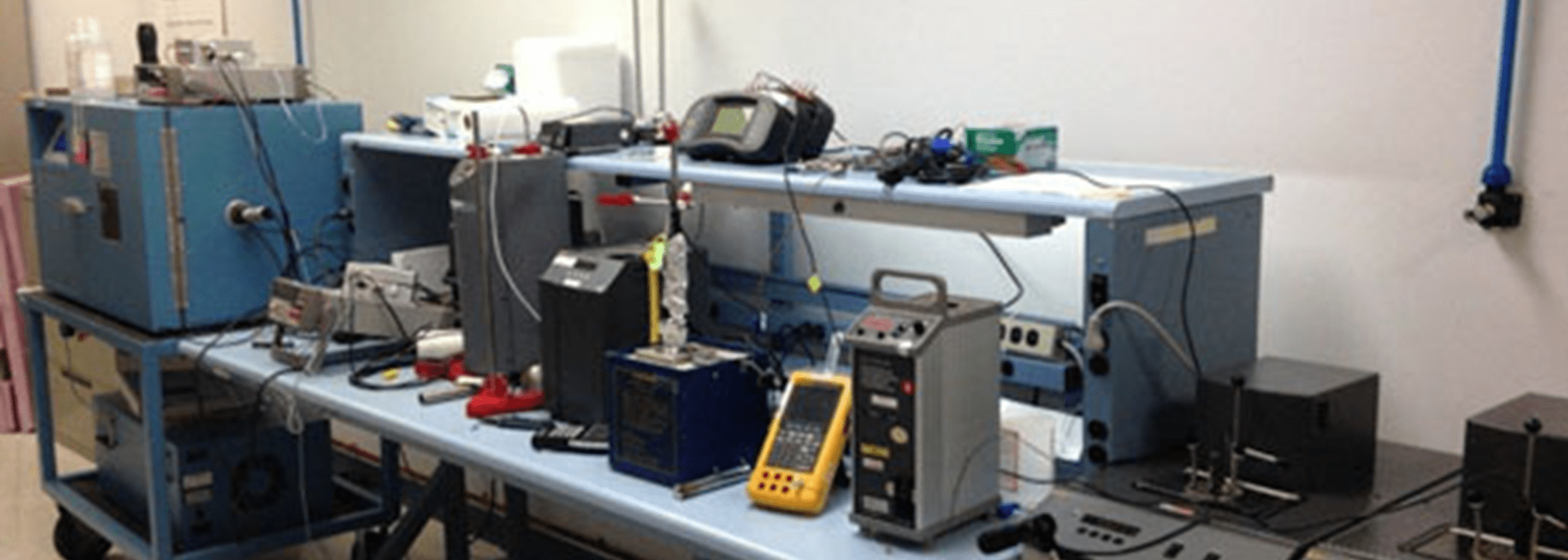
Behind the scenes, calibration laboratories play a pivotal role in safeguarding the food systems we depend on. Their expertise is crucial for the industry to thrive, yet their role often goes unnoticed.

Calibration services, provided by ISO/IEC 17025:2017 accredited laboratories like Selfa, ensure that these unsung heroes continue to perform their silent duty. 

Embrace the idea that calibration services can become silent guardians of your business, the invisible hands that ensure your products are safe, consistent, and efficient. Take a moment to consider how precision behind the scenes can make a significant difference in the grand narrative of the food industry.

Let us explore some of the consequences of miscalibration for a large food distribution company that specializes in the delivery of fresh produce relies on a fleet of refrigerated trucks to transport goods from the warehouse to various retailers.

  1. Food Safety: If the temperature sensors inside the refrigerated trucks are even slightly miscalibrated, it can result in temperature fluctuations. This can lead to bacterial growth in the products, making them unsafe for consumption. In the worst-case scenario, consumers may fall ill due to foodborne illnesses, leading to potential legal actions against the food distribution company.
  2. Product Quality: The quality of the fresh produce is also affected. A miscalibration causing temperature fluctuations can lead to the deterioration of the products, resulting in unsellable or lower-quality items upon arrival at the retailers. This directly impacts the company’s finances as they may need to compensate for losses or discard spoiled products.
  3. Reputational Damage: Consistent miscalibrations can lead to a tarnished reputation for the food distribution company. Retailers and consumers will lose trust in their ability to provide safe, high-quality products. This loss of trust can result in reduced business and profitability over time.
  4. Compliance Issues: In the food industry, regulatory bodies have strict standards for temperature and humidity control. Even slight miscalibrations that lead to non-compliance can result in fines and penalties for the company.

To prevent these consequences, the food distribution company must invest in precise calibration and regular maintenance of its cold-chain monitoring systems. Accurate calibration ensures that temperature and humidity readings are reliable and within the required ranges, thereby safeguarding food safety, product quality, and the company’s reputation. It also ensures compliance with industry regulations, reducing the risk of legal actions and fines.

Final Word…

In a world where food systems are integral to our well-being, calibration services silently secure this essential aspect of our lives. They are the silent guardians of an industry that feeds nations.

The next time you walk into a supermarket, dine at a restaurant, or cook a meal at home, take a moment to appreciate the unseen forces at work, ensuring that the food you enjoy is safe, consistent, and high-quality.

And for those who wish to explore the world of calibration services, consider how these silent guardians can support your journey in the food industry. Calibration is the key to unlocking excellence.

Talk to us today about how Selfa can help you improve the efficiency and effectiveness of your measurement and control systems.

Avoiding Common Pitfalls in Industrial Machinery Maintenance

Industrial machinery forms the backbone of many operations, and effective maintenance is crucial to keep it running smoothly. However, there are common mistakes that organizations make when it comes to maintenance, which can lead to downtime, increased costs, and safety risks. Let’s explore a few of these pitfalls and how to steer clear of them:

  1. Neglecting Regular Inspections and Maintenance: Regular check-ups and preventive maintenance are vital to catch potential issues before they escalate. Neglecting this can lead to unexpected breakdowns and higher repair costs.
  2. Lack of Documentation: Proper record-keeping of maintenance activities, repairs, and replacements is essential. Without accurate documentation, it’s challenging to track machine history and make informed decisions regarding maintenance strategies.
  3. Using Incorrect or Poor-Quality Parts: Opting for subpar or incorrect parts during maintenance can compromise the performance and longevity of machinery. Always choose high-quality, genuine parts to ensure optimal functioning.
  4. Overlooking Training and Skills Development: Skilled technicians are key to effective machinery maintenance. Investing in training and skill development programs ensures that your team is equipped to handle maintenance tasks efficiently and accurately.
  5. Ignoring Safety Protocols: Safety should be a top priority in any industrial setting. Failing to follow safety protocols during maintenance can lead to accidents or injuries, impacting both individuals and the organization.
  6. Not Planning for Downtime: Maintenance inevitably requires downtime. Failing to plan and communicate downtime schedules to relevant stakeholders can disrupt production and customer commitments.
  7. Underestimating Future Maintenance Needs: Industrial machines age and evolve, requiring adjustments in maintenance approaches. Failure to anticipate and plan for changing maintenance needs can lead to inefficiencies and increased costs.

Proper and regular calibration of industrial machinery plays a pivotal role in effective maintenance management. Calibration ensures that machinery operates within specified performance parameters, guaranteeing accurate readings and optimal functionality. By regularly calibrating equipment, you not only extend its lifespan but also enhance its reliability and precision. Moreover, calibrated machinery contributes to a safer work environment and compliance with industry regulations. Incorporating calibration into your maintenance regimen provides a proactive approach to identifying potential issues early on, enabling timely interventions and cost-effective solutions. It’s an investment that pays off by improving overall operational efficiency and reducing downtimes, ultimately leading to better outcomes for your organization.

Avoiding these common mistakes is crucial to maintaining an efficient, productive, and safe industrial environment. By prioritizing regular inspections, proper documentation, employee training, safety protocols, and strategic planning, organizations can ensure their machinery operates optimally, enhancing overall productivity and profitability.

#IndustrialMachinery #MaintenanceBestPractices #OperationalEfficiency #SafetyFirst

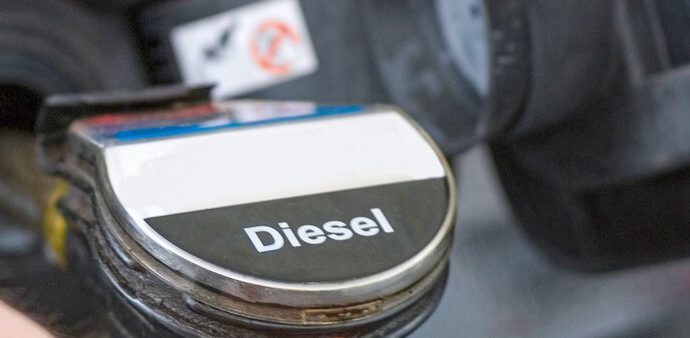
Level monitoring in diesel tanks

How is it possible for a mixture of water and diesel to come out of the fuel pump at the filling station? In recent years, water has repeatedly penetrated and contaminated underground diesel or gasoline tanks, especially during heavy rainfall. Engines do not take well to this at all. The engine may start for a brief time because the 2 fluids do not mix and a certain amount of diesel is left in the injection system. But the driver of this vehicle will not get far. That it because the water sinks to the bottom of the tank and is therefore sucked through the pump first. This can lead to significant damage. The entire fuel system must be cleaned and filters must be replaced.
To prevent this from happening, a diesel tank system manufacturer commissioned JUMO (Selfa is JUMO’s sole partner in West Africa) to find an overall solution. In a diesel tank, the level should be measured continuously so that messages for refilling can be sent and pump control can be implemented. At the same time, point level measurement should be used to detect possible water ingress.

Solution approach

The solution implemented by JUMO is based on a combination of products from the JUMO NESOS range. A float switch and level transmitter were integrated into one product so that installation is only possible via a tank opening. In addition, the product series has the necessary approvals for potentially explosive areas.

Innovative combined solution

The float switch is useful for the varying density of water and diesel fuel. It is designed to float on the interface between water and diesel, as a result of which an alarm message is possible. The JUMO NESOS combined sensor is designed specifically for application in diesel tanks with an overall length of over 4 meters. Level measurement enables service station operators to determine the actual level of diesel and the average consumption, which helps them to proactively and economically plan for demand.

Moreover, JUMO NESOS level measuring transformers provide a virtually continuous standard signal from
4 to 20 mA within a temperature range of -52 to +180 °C. The dissolution amounts to 5.5 mm. Variants with Pt100 or Pt1000 temperature sensors as well as with temperature switches, temperature transmitters, and displays are available as optional extras.

Automation system for plant control

Complete plant control can be implemented with the scalable JUMO mTRON T measuring, control, and automation system. The modular component concept combines variable I/O modules with powerful control panels. It is just as impressive in the area of measured value recording as it is for complex control tasks and sophisticated automation solutions. Extremely high-quality universal analog inputs for a wide range of input variables and the JUMO control algorithm that has been proven over the years to ensure a high degree of process reliability and the greatest possible transparency. A digital input module is used for the necessary online alerts. As a result, the user can receive information via email on their smartphone.

The JUMO diraVIEW digital indicator directly reports malfunctions on the tank. The basic device of this series is already equipped with 1 analog input, 2 binary inputs, 2 relay outputs, 2 logic outputs, and a voltage supply for two-wire transformers. 3 extension slots can be equipped with additional inputs and outputs as well as with interfaces. Alarm texts are particularly easy to notice due to the color change from green to red.

Project outcome

The level monitoring was implemented as specified. The combined solution of the float switch and level transmitter from the JUMO NESOS series ensures precise point and continuous level measurement. It signals when it is time to fill up and alarms if water should enter the tank. An online alarm is triggered through the JUMO mTRON T measurement, control, and automation system, which also controls the pumps. Also, color-coded alarm texts are displayed directly on the tank via the digital display of the JUMO diraVIEW indicator.

Which Is More Important: ISO 17025 Accreditation or ISO 9001 Certification?

To the casual observer, the terms “accreditation” and “certification” might sound as though they mean the same thing.
But ISO – the International Organization for Standardization and the world’s largest accreditation/certification group – defines them differently.

  • Accreditation – “A third-party attestation related to a conformity assessment body conveying formal demonstration of its competence to carry out specific conformity assessment tasks.”
  • Certification – “A third-party attestation related to products, processes, systems or persons.”

As Quality Magazine noted a few years ago, ISO’s hierarchy is set up so that accreditation outranks certification in terms of importance.

Accreditation applies only to bodies implementing a certification service. This could be an ISO 17025 accredited lab delivering an accredited calibration or testing certificate.

Another way to think about it: You received a degree from your university. It was a certification that you were proficient in your field of study. But your school needed to become accredited in order to show that it had the authority to deem its students proficient.

Two Different Groups Oversee The World’s Accreditation Bodies.

  1. The IAF, or International Accreditation Forum, which evaluate groups that accredit organizations that certify manage systems, products or people.
  2. The International Laboratory Accreditation Cooperation (ILAC), which assesses groups that accredit calibration and testing laboratories.

The confusion between certification and accreditation came about in part when some certification organizations began assessing labs to ISO 17025, a standard meant for deciding the qualifications of testing/calibration labs, and thus ILAC territory.

The ISO 9001 quality system is different than ISO 17025 in terms of purpose, emphasis and criteria. The standards line up in some areas, but they are separate, and achieving one does not mean you’ve met compliance with the other.

Do We Need ISO 9001 or ISO 17025?

IAF and ILAC have both said that ISO 17025 means accreditation rather than certification. Yet you may be reading this and wondering whether a company needs ISO 9001 certification, ISO 17025 accreditation, or both.

ISO 9001 certification applies to an entire organization. It’s an effective tool for management but does not include the necessary technical content to show that test/inspection/calibration data are reliable. Labs that perform calibration – and do not make products – need to meet ISO 17025 requirements, and not necessarily those of ISO 9001.

Suppliers who need reliable calibration backed by a quality system should seek out labs accredited to ISO 17025. And that accreditation should come from a body recognized under the ILAC’s mutual recognition agreement or MRA. These agreements are aimed at producing a network of accreditation bodies whose work is recognized around the globe.

For companies that do more than just laboratory services, it’s become common to get certified to ISO 9001 while having a lab accredited to ISO 17025.

At Selfa Calibration Laboratory, we chose to become accredited by NiNAS. Having this seal of approval from NiNAS means that we stand out even more in the already specialized market of calibration services provision.

PECB signs a partnership agreement with Selfa

June 21, 2019 – PECB is honored to announce that it has signed a new partnership agreement with Selfa, to distribute PECB training courses in Nigeria. This collaboration with Selfa will endorse the dissemination of PECB courses, while ensuring the delivery of high quality services. 

https://pecb.com/en/newsDetail?nid=1075&lid=1

“Selfa is committed to build and maintain upon healthy choices, therefore, we are very enthusiastic for this agreement, and we promise that we will provide our full-time services and efforts on behalf of this partnership,” said Eric Lachapelle, CEO of PECB.

“We believe that working with Selfa is a great opportunity to provide our services for people in Nigeria, and widen our network of professionals. Selfa strives to meet the needs of clients, and provide them with healthy choices and ongoing commitment with its presence in Nigeria. As such, we are excited for this partnership and encourage others to join our mission,” added Lachapelle.  “We believe our partnership with PECB allows us to strengthen our diversification strategy of training offering to our customers. With this partnership, we can offer our customers high quality trainings and international certifications.” said Rotimi Lijofi, COO of Selfa. “PECB is a global leader and renowned name as certification body for person and management systems on a wide range of international standards including ISO 9001, ISO 14001, ISO 17025 and OHSAS 18001 among others” added Rotimi. 

About PECB 

PECB is a certification body for persons, management systems, and products on a wide range of international standards. As a global provider of training, examination, audit, and certification services, PECB offers its expertise on multiple fields, including but not limited to Information Security, IT, Business Continuity, Service Management, Quality Management Systems, Risk & Management, Health, Safety, and Environment.  We help professionals and organizations show commitment and competence with internationally recognized standards through education and certification against rigorous, internationally recognized requirements. Our mission is to provide our clients with comprehensive services that inspire trust, continual improvement, recognition, and benefit the society as a whole. For further information about PECB and the list of standards, please visit http://www.pecb.com

About Selfa

Our mission at Selfa is to be the preferred name in the provision of industrial quality management solutions in Nigeria. Our business areas include Industrial Measurement and Automation, Human Capacity Development (Academy) as well as Instrument Calibration. Our trained staff are committed to providing total customer satisfaction which includes fast turnaround times and competitive rates. These are the reasons why many of Nigeria’s leading companies have chosen Selfa as their service provider of choice. For further information about Selfa and our service offerings, please visit http://www.selfacontrol.com.

Introduction to Measurement and Calibration

This course is intended for anyone using or calibrating measurement instruments, calibration coordinators, or for those responsible for maintaining quality. A thorough knowledge of measurement science is key to maintaining ISO quality standards. This course is designed to ensure that calibration terminology and practices are understood throughout the organization and especially by persons responsible for the contracting of calibration services. The course covers the basics to more advanced topics. 

Course Details:

  • Course Duration: 4 hours (9:00 am – 1:00 pm)
  • Date: April 25, 2019
  • Location: LCCI Building, Ikeja, Lagos, Nigeria

Learning Objectives:

  • Describe what metrology is, and what metrologists do.
  • Explain why measurement is important in our daily lives, commerce, product risk management, and international trade.
  • Contrast resolution, precision, and accuracy of a measurement system. Describe measurement uncertainty.
  • Describe the structure and use of a measurement system.
  • Describe different levels of standards and the requirements of traceability.
  • Explain the various components of a calibration system.
  • Describe the basic attributes of making good measurements.
  • Describe the units of measure and the various instruments used in various measurement parameters.

Who Should Attend:

This training will benefit all persons at any level using measurement instruments, including calibration coordinators, inspection personnel, and management; it can serve as a refresher for experienced technicians; or it can be used in orientation for new hires.

Course Outline:

  1. Introduction
    1. Definition of metrology
    2. Measurements in manufacturing
    3. Measurement in the global marketplace
    4. Importance of measurement
  2. Development and Concerns of Metrology
    1. Need for better measurements
    2. Determine and describe the differences between resolution, accuracy, precision, calibration, Type A uncertainty and Type B uncertainty
  3. Standards and Standardization
    1. Working standards, check standards and international standards
    2. Levels of standard accuracies, accuracy ratio between levels of calibration pyramid
    3. Requirements of traceability
    4. Metrology standardization documents
  4. Managing the Metrology System
    1. When a metrology system is needed
    2. Components of a metrology system
    3. Periodic calibration
    4. Determining period, fixed time intervals or other means, measurement assurance
    5. Record keeping
    6. Documented procedures
    7. Training
  5. Making Good Measurements: Elements of a Measurement System
    1. Measuring Instrument
    2. Measuring procedure
    3. Analysis of Measured data
    4. Measurement assurance
    5. Isolating errors
    6. Capability study
    7. Gage R & R
  6. Units and Measurement Instruments
    1. Length, height, optical, micrometers, metrology, etc.
    2. Time, Temperature, Flow, electrical quantities, etc.

The Benefits of a Predictive Maintenance Plan

In the age of Industry 4.0 and the Industrial Internet of Things, plant maintenance has the potential to become less expensive and disruptive, and more insightful. To achieve these benefits, however, may require a change in how you maintain your plant’s equipment. 

Predictive Maintenance

There are four main ways you may currently be managing your plant’s equipment:

  1. Reactive maintenance – replacing parts only when machinery or equipment breaks.
  2. Proactive maintenance – identifying and addressing problems that lead to breakdowns.
  3. Preventive maintenance – maintaining equipment in good operating order to prevent breakdowns.
  4. Predictive maintenance – using inputs from connected machines and devices, remote monitoring, predictive analytics, and automated maintenance orders to predict when maintenance is necessary based. Predictive maintenance can also be done manually by periodically checking equipment with handheld vibration or audio sensors.

To help you determine how predictive maintenance can offer greater benefits and transform your plant’s operational costs, let’s start with an example that lets you weigh the costs and benefits of each maintenance approach. Ultimately, as you’ll see, it will be a combination of proactive, preventative, and predictive maintenance that will help you achieve the best results.

The Costs and Benefits of Reactive, Proactive, and Preventative Maintenance

Assume that somewhere in your plant right now, a bearing is going bad. How will your maintenance organization deal with it?

If your plant is like many, the first sign of an impending failure is a change in how the machine sounds, which an operator will often notice. Or assuming it’s a bushing that’s failing, the operator might see metal shavings. But if these signs go unnoticed, you may face catastrophe, as the part vibrates, heats up, or breaks. The typical response is reactive maintenance—where you call in a technician to restore equipment to its normal operating condition. Although costs are low until machine failure, the end result is that you incur a much greater expense for unexpected downtime. All the while, your backlog of orders is piling up. And, you may wait a long time for spare parts, unless you’ve stockpiled just the right ones.

With sufficient data, you may also be able to employ proactive maintenance to identify and address the problems that lead to breakdowns. For the bearing, the issues could be inappropriate lubrication, poorly aligned parts, or unfavorable environmental conditions. You’ll need to equip your plant with sensors or employ handheld products to locate areas where you might place sensors to supply data for a predictive or preventive plan. If you have the data to address root causes of parts failures, proactive maintenance can help prevent equipment failures and resulting downtime, disruption, and cost.

To move past the antiquated method of running equipment to failure, you may try to maximize uptime with preventive maintenance. You schedule maintenance based on time estimates for components from historical records or OEM recommendations. Although preventive maintenance is a step up from reactive maintenance, it also has some drawbacks. You may end up servicing and replacing good parts, while increasing downtime and disrupting operations to check equipment that’s running just fine. That’s where predictive maintenance can help.

The Value of Predictive Maintenance

With predictive maintenance, sensors can gather relevant, real-time data on the condition of the bearing. This information is then stored in a secure, cloud-based network that you can access at any time. Data from the sensor can be used to predict when you should perform proactive maintenance or preventative maintenance.

To minimize disruption, most predictive maintenance can be performed while equipment is operating. Machine-to-human communication and data analytics give you insight into performance levels without manual routine check-ups.

In recent years, costs have decreased on technologies such as sensors, computing power, data storage, and bandwidth, allowing even smaller organizations to get started with predictive maintenance. Still, outfitting your plant requires an initial investment that can be intimidating. But, there’s good news. Although entry level costs may be high, you can expect to see a 10X return on investment in predictive maintenance within the first two years and a reduction in maintenance costs of 25 to 30 percent according to the U.S. Department of Energy. A study by the Enterprise Strategy Group found that unplanned downtime for the average manufacturing plant can cost $30,000 to $50,000 per hour.

Sensors that have a say!

JUMO IO-Link sensors for temperature and pressure measurement

Long plant downtimes now belong to the past. The new JUMO temperature and pressure sensors with IO-Link use the integrated diagnostic function to better plan the availability or the exchange of sensors. In addition, time-consuming parameterizations when changing sensors are eliminated as the necessary data is transferred from the superordinate system.

Your benefits in a nutshell

  • Optimization of the production process through communication down to the lowest field level
  • Reduction of mounting and startup times
  • Increase of plant efficiency due to maximum transparency down to the sensor level
  • Reduction of maintenance and service costs with simultaneous increase in plant availability
  • High degree of process reliability due to long operating life and great accuracy
  • Flexible use through compact design type and a variety of process connections

What is IO-Link?

IO-Link is simply flexible – optimization of the production process through communication down to the lowest field level

Flexibility, production process optimization, and remote serviceability are important performance parameters for machines or plants. Sensors with IO-Link now give the plant operator access to the lowest field level. Only minimal effort is required to retrieve sensor information, parameterization, and diagnoses so that plant conditions can be ideally evaluated. The efficient point-to-point communication of IO-Link is based on the well-known three-wire sensor connection that does not place additional demands on the cable material. IO-Link is consequently not a fieldbus, but the further development of the previous and proven connection technology for sensors. IO-Link is a serial, bidirectional point-to-point connection for signal transmission and energy supply within any number of networks, fieldbuses, or back panel buses.

IO-LINK is quick and straightforward – reduction of mounting and startup times

The use of sensors with IO-Link can significantly reduce the required effort for mounting and startup. This advantage is made possible through simplified cabling as well as automation of the startup through parameter storage and duplication. During mounting, ready-to-install cables are used so that no assembly is required and error sources are omitted. Startup is also possible through automation as the parameters can be downloaded and made available to the device in a matter of seconds. Users particularly appreciate IO-Link due to its simple installation and parameterization as well as its independence from the fieldbus. The result is that the need for wiring is significantly decreased and that each sensor always has its own “ID card” due to consistent parameter data retention. This greatly reduces the amount of work involved in troubleshooting.

IO-Link is simply efficient – increase of plant efficiency due to maximum transparency down to the sensor level

Times of unexpected plant failures due to a sensor defect are over. The reason here is that the integrated diagnostic mechanisms allow early recognition and repair of defective sensor states. The functions contained in the sensors – such as operating hours counter, drag indicator, and detection of probe breaks/short-circuits – help to evaluate the sensor states early enough to react so that plant efficiency increases considerably. IO-Link offers the option of exchanging cyclical as well as acyclic data with superordinate levels. For example, parameter data can be downloaded to a sensor or, alternatively, diagnostic data can be extracted during operation. Due to a transmission speed COM 3 with 230.4 kBaud and the cycle time of 2 ms data is quickly exchanged and available within seconds.

IO-Link has an eye on costs – cost reduction while plant availability increases at the same time

IO-Link closes the communication gap between the field level and the sensor level. As a result, other than the process variables, data for identification, for parameterization, and about the condition of the device can be transferred. Now information is available that prevents the mix-up with wrong device types during device exchange. The parameterization of the sensors is saved in a superimposed fashion so that it can be automatically transferred during device exchange.
Each IO-Link devices includes a device ID. The IO-Link master retrieves the device ID and can assign the device to an IODD. This offers the option to distinguish the sensor type (temperature sensor/pressure sensor) from other ones through the device id as each sensor type possesses several device IDs. These clearly identify the sensor and describe its different features. One result is that the exchange of a sensor with another that deviates in the measuring range and accuracy class can be identified immediately. The wrongly mounted sensor is instantly replaced by the correct one and is not even implemented, which prevents its destruction or an error during running operation of the plant.